Commercial Fit-Outs in Victoria 2026 — What Owners Should Budget For
What a commercial fit-out actually costs in Victoria in 2026 — across hospitality, retail, and office, broken down by stage and decision.
A commercial fit-out lives or dies on a different set of variables than a residential build. The owners who finish happy on a hospitality, retail, or office fit-out are the ones who budgeted for the variables that don't show up on the headline rate.
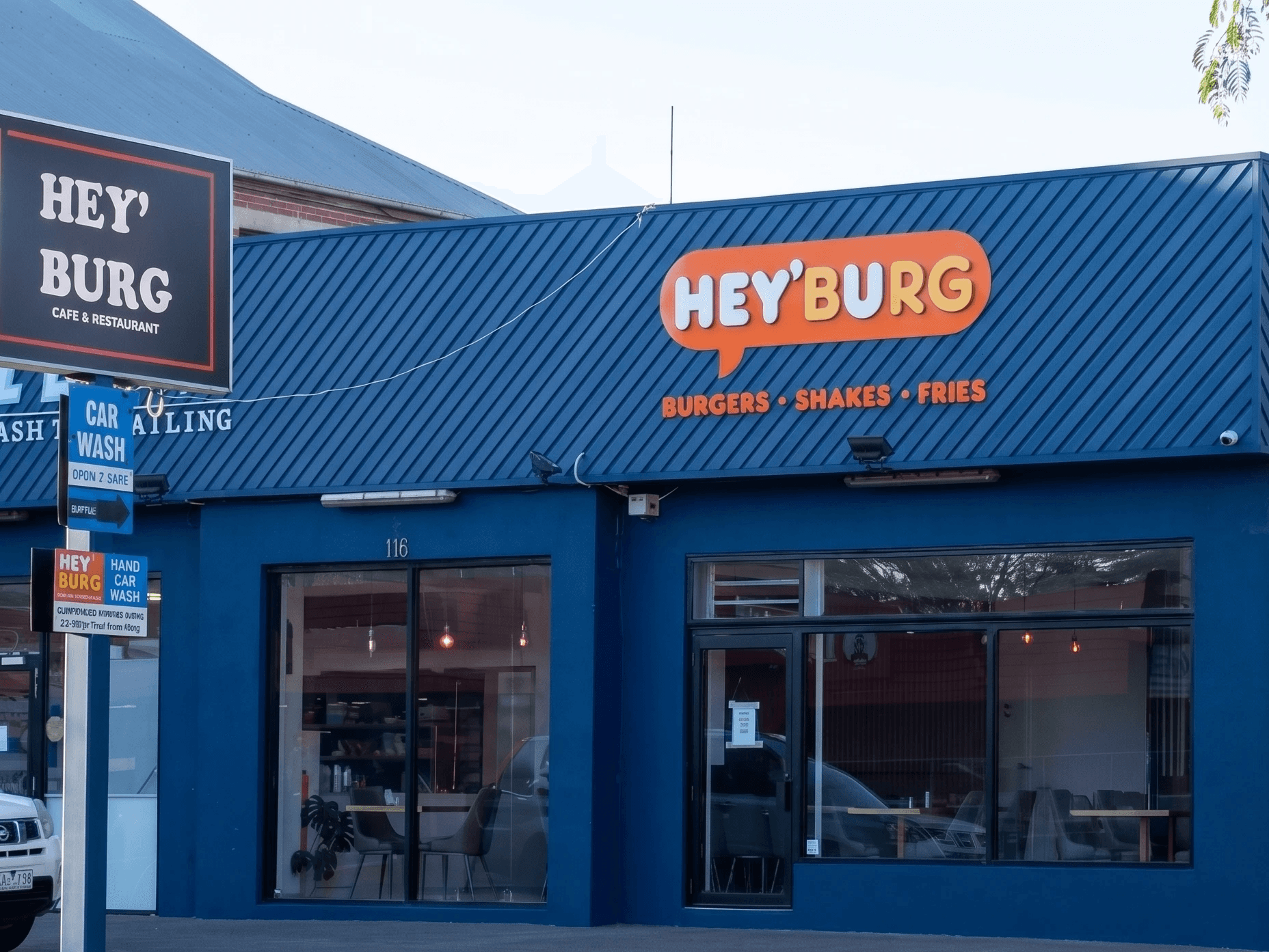
We work across both residential and commercial fit-outs at Gidaya. The first commercial fit-out we revealed publicly is Project Heyburg, a burger restaurant on Bell Street in Coburg trading from breakfast through to 2 AM. The cost framework below is the framework we walk through with every new commercial-fit-out client.
The headline rate ranges in 2026
Cafe and small hospitality fit-out. $1,800 to $3,500 per square metre at the build-cost level, before kitchen equipment, fixtures, fittings, and finishes that the operator owns separately. A 120-square-metre cafe runs roughly $250,000 to $450,000 in build cost.
Restaurant and bar fit-out. $2,500 to $5,000 per square metre. A 180-square-metre venue runs $500,000 to $900,000. Premium dining fit-outs trend higher.
Retail fit-out. $1,500 to $3,500 per square metre depending on category. Standard retail trends to the lower end. Boutique fashion, jewellery, or experiential retail trend to the higher end.
Office fit-out. $1,200 to $3,000 per square metre depending on density, amenities, and finish tier. The corporate-office fit-out market in Melbourne CBD generally clusters around $2,000 to $2,500 per square metre on the C-grade-to-A-grade refit.
Boutique medical, dental, allied health. $2,500 to $4,500 per square metre. Plumbing intensity and accessibility compliance shape the rate.
What's outside the build-cost rate
The build-cost rate per square metre captures the structural, services, and finishes work the builder delivers. Outside that scope and worth budgeting separately.
Kitchen equipment. For a hospitality fit-out, kitchen equipment runs $80,000 to $300,000 depending on the menu and the volume. The builder coordinates installation; the equipment package is owner-supplied.
POS and back-of-house tech. $20,000 to $60,000 across most hospitality and retail venues.
Furniture, fixtures, and equipment (FFE) on the trading-floor side. Tables, chairs, banquette joinery, decorative lighting. $30,000 to $150,000 depending on venue scale and finish tier.
Signage. Internal and external. $5,000 to $40,000.
Branding and visual merchandising. $10,000 to $40,000.
Council planning fees, building permits, certifications. $5,000 to $25,000.
Each line is part of the project even if it's not part of the build contract. Owners who scope the build cost without scoping the parallel lines end up financing the gap from working capital they planned to use for opening.
The four cost-drivers that move every commercial fit-out
Mechanical services. Heating, ventilation, air-conditioning, and the kitchen exhaust if it's hospitality. The mechanical scope on a hospitality fit-out can run 20 to 35 percent of total build cost. Underestimated almost universally.
Electrical. Three-phase upgrade, switchboard work, lighting density, emergency lighting, accessible-power for retail. 12 to 20 percent of total build cost.
Plumbing and hydraulics. Grease traps for hospitality, accessible-bathroom compliance, hot-water systems, beverage-line plumbing. 8 to 15 percent of total build cost on hospitality. Lower on retail and office.
Compliance and certifications. Disability Discrimination Act compliance, food-safety supervisor sign-offs, building permits, certifier sign-offs. The work itself isn't expensive but the timeline impact is. Compliance lead times can add four to eight weeks to a project if not sequenced early.
What an owner should know before signing the build contract
The lease. The fit-out is being built on a leased premises in almost every commercial case. The lease shapes the timeline, the make-good requirements at end-of-lease, the landlord's consent requirements for fit-out work, and the responsibility split for services upgrades. We ask to read the lease before quoting.
The trading window. A delayed handover on a residential build means an owner moves in three weeks late. A delayed handover on a hospitality build means weeks of lost trade at $30,000 to $80,000 per week of revenue. The timeline is a financial decision, not a logistical one. We sequence builds to deliver on date.
The kitchen team's input. For hospitality. The head chef and the operations team know the venue's flow better than the architect or the builder. We schedule a coordination meeting between the chef, the architect, and the builder before joinery is signed off. The detail that emerges from that meeting saves four to eight weeks of operational pain in year one.
The opening campaign. The marketing window for a new venue is set by social media, community engagement, and word-of-mouth in the four weeks before opening. The build needs to deliver on a date the venue can promote against, not a date that floats with progress.
How Heyburg ran
Project Heyburg was a 116 Bell Street Coburg fit-out. The brief was a high-volume burger venue trading from breakfast through to 2 AM. The decisions that shaped the project.
Kitchen pass alignment with the order point. The pass had to be visible, the order point had to be unambiguous, the customer-facing flow had to absorb a 9 PM Saturday rush without becoming chaotic. Three rounds of joinery layout to get this right.
Acoustics across the dining room. Hard surfaces in a hospitality venue create a sound level that flattens conversation by mid-evening. Acoustic-panel placement, banquette upholstery density, and ceiling treatment were each modelled.
Surface durability under deep-fryer load. Seventeen hours a day of fry-line operation puts a load on every adjacent surface. Material selection for surrounds and floors was the most important decision after the kitchen layout.
Front-of-house signage and lighting that match the brand voice. The owners had a clear voice on the brand. Our job was to translate that voice into a venue that holds up to fifteen years of high-volume trade.
The fit-out delivered on date. Heyburg has been trading since opening. The detail is in Project Heyburg.
The commercial-builder shortlist conversation
The other half of the cost story is which builder you choose. The shortlist criteria, the commercial-builder interview, and the questions worth asking are in Choosing a Commercial Builder in Victoria. For owners who want to compare commercial-fit-out costs against a residential equivalent, The Real Cost of a Custom Home in Victoria 2026 (/journals/real-cost-custom-home-victoria-2026) walks through the per-square-metre, per-room, per-stage and per-decision lenses on the residential side.
The work is varied. The standard isn't.
Built with care.
Gidaya Group.